ZHENGOU GroupZHENG'OU

Application

Usines & ateliers

Trafic de chariots élévateurs, charges ponctuelles et outils qui tombent. Le mode de défaillance ici est l'abrasion, pas la chimie — dureté et résistance aux chocs d'abord.

Ce que ce sol doit endurer

Comprenez le mode de défaillance avant de choisir un système.

  1. 01

    Forklifts and heavy vehicles run back and forth all day; steel and hard wheels wear ordinary coatings through and lift their edges.

  2. 02

    Dropped workpieces and tools create point impacts; a small crater soon spreads into large-scale flaking along its edges.

  3. 03

    Machine oil, cutting fluid and cleaning agents soften ordinary coatings over time, causing blistering and delamination.

  4. 04

    Production rarely stops, so the floor has to be done zone by zone, cure fast and be walkable the same day.

Usines & ateliers

Systèmes de revêtement recommandés

Sélectionnés selon la charge — il n'existe pas de système universel, seulement celui qui convient.

01

Solvent-free epoxy self-levelling system

Complexe
Primer seal → epoxy mortar screed → epoxy filler → solvent-free epoxy self-levelling topcoat
Épaisseur type
Typically 1–3 mm, selected by load

Seamless and dense, easy to clean and resistant to oil. The best value for assembly, packaging and light-to-medium load workshops.

03

Waterborne polyurethane mortar system

Complexe
Waterborne polyurethane primer → polyurethane mortar → polyurethane topcoat
Épaisseur type
Typically 4–6 mm

A thick-build structural floor: tolerant of hot washdown, thermal cycling and damp substrates — the reliable choice for heavy load and tight build programmes.

Séquence d'application standard

Le même sol avec les mêmes matériaux dure des années de plus quand les travaux sont menés avec soin. Les six étapes ci-dessous constituent notre séquence standard pour les sols époxy : ce que fait chaque étape, selon quel norme, et ce que nous vérifions à la réception. Pour votre atelier, nous ajustons le nombre de couches et l'épaisseur aux charges réelles, aux produits chimiques et à la fenêtre d'arrêt.

  1. 01

    Substrate preparation

    Grinding, repair and dust extraction; confirm the strength, flatness and moisture of the slab before anything is applied. Large areas are ground with dust-free grinders, while edges, movement joints and old coatings are treated separately; where slab humidity is too high, a moisture barrier is applied first.

  2. 02

    Primer sealing

    Roll on the epoxy primer to seal the capillaries and lock the coating onto the slab. The primer penetrates to form a sealing film; once touch-dry we check for whitening or skips and spot-roll a second coat where pinholes show.

  3. 03

    Mortar screed

    Trowel a graded quartz-sand mortar to level the floor and build structural strength. The mortar is applied in one or two passes to the specified build, then ground and vacuumed once cured.

  4. 04

    Filler coat

    A fine-sand filler seals pinholes and leaves a smooth base for the topcoat. Once dry, the filler is fine-ground overall and vacuumed clean before the topcoat, so no grit is carried into the self-levelling layer.

  5. 05

    Self-levelling topcoat

    The self-levelling topcoat is poured and trowelled; the material flows out to a seamless surface. It is poured continuously zone by zone in one pass, de-aerated with a spike roller, and the area is closed off during the work to avoid cross-contamination.

  6. 06

    Topcoat finishing

    The ultra-abrasion polyurethane topcoat is rolled in crossing passes, leaving an even sand texture that resists wear and scratching. Lanes are rolled and reopened progressively; foot and forklift traffic is barred during cure, and the floor is inspected and handed over after full curing.

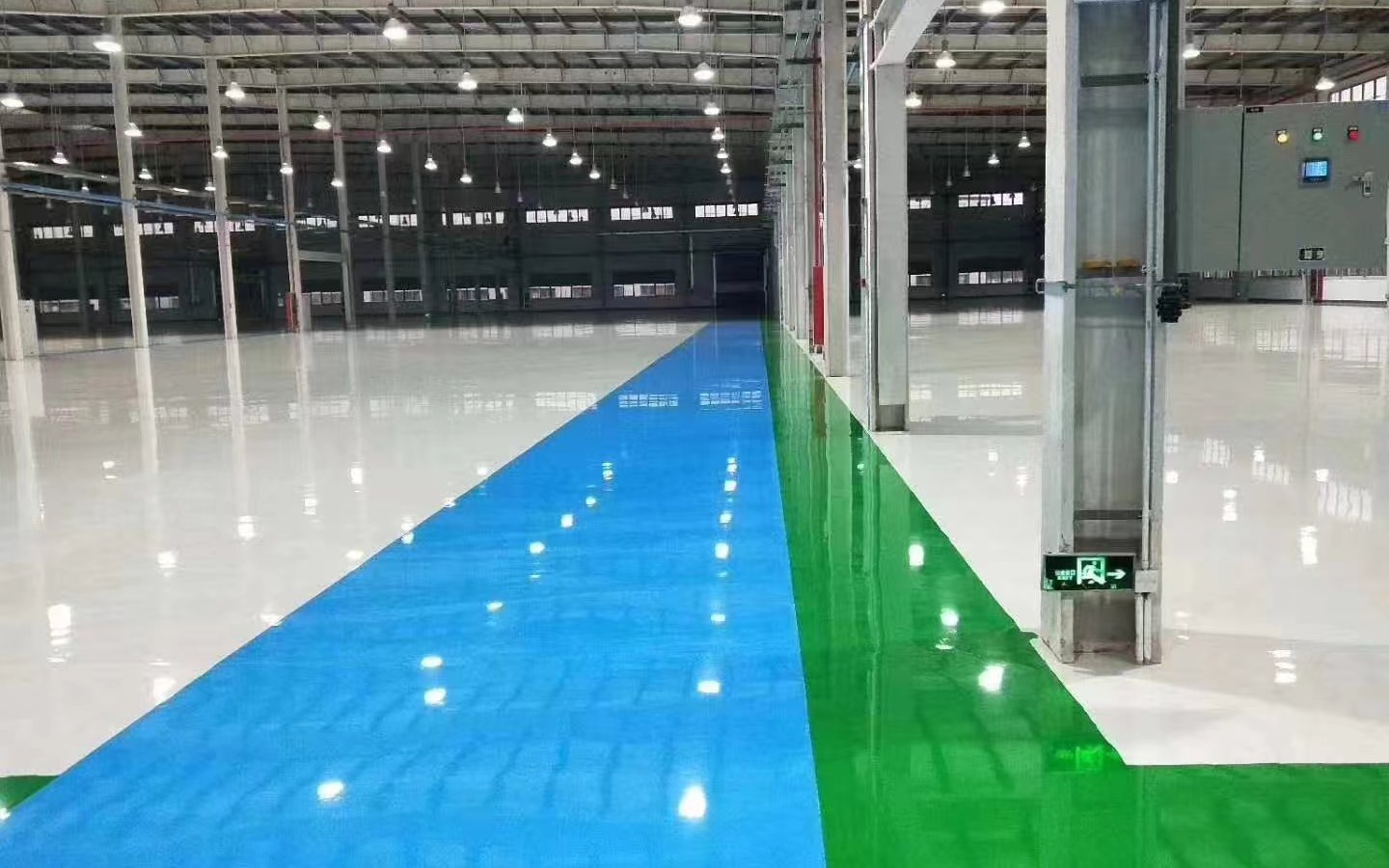
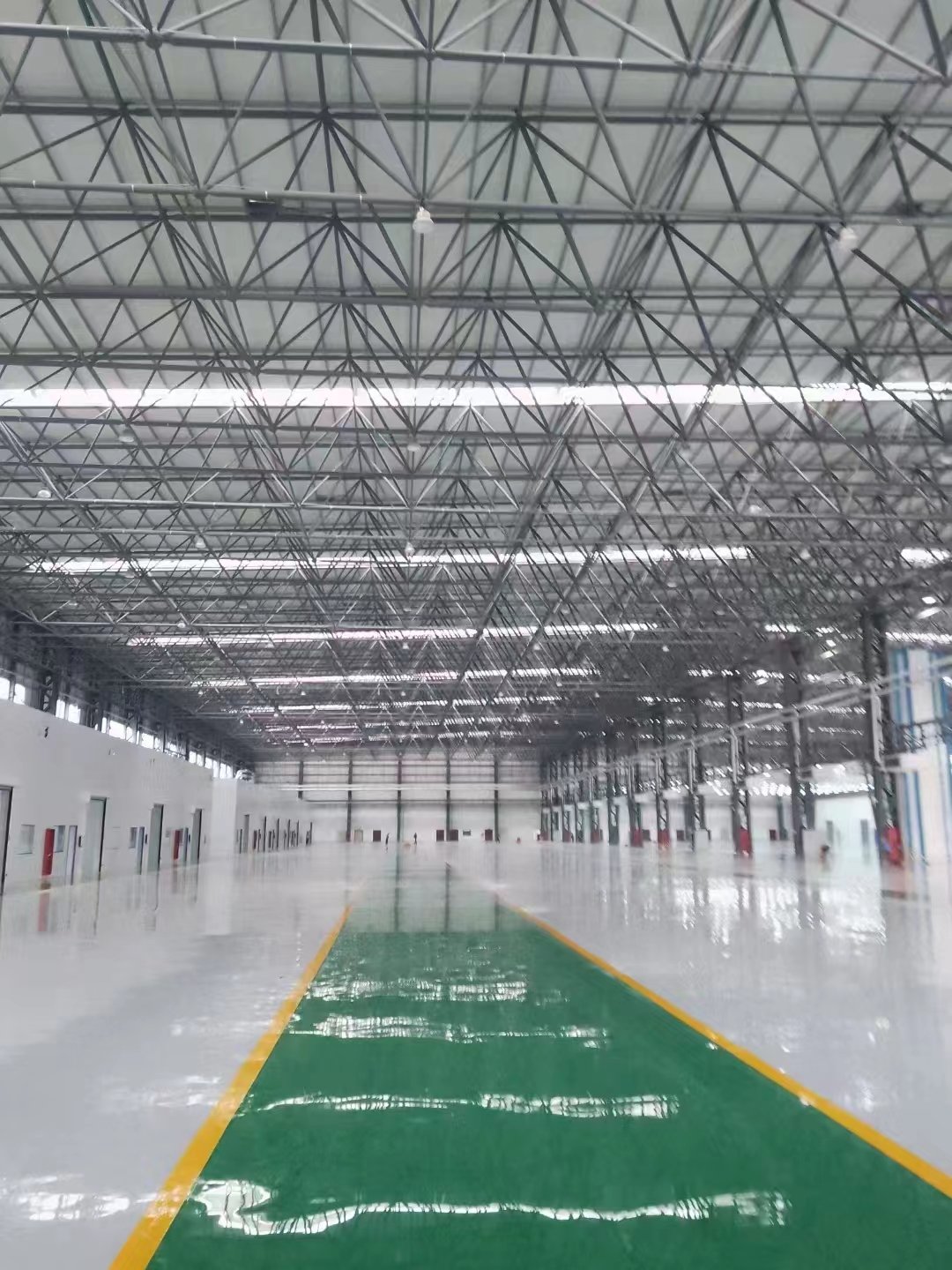
Photos de chantier

Sols finis photographiés sur site — cliquez pour agrandir et examiner le détail.

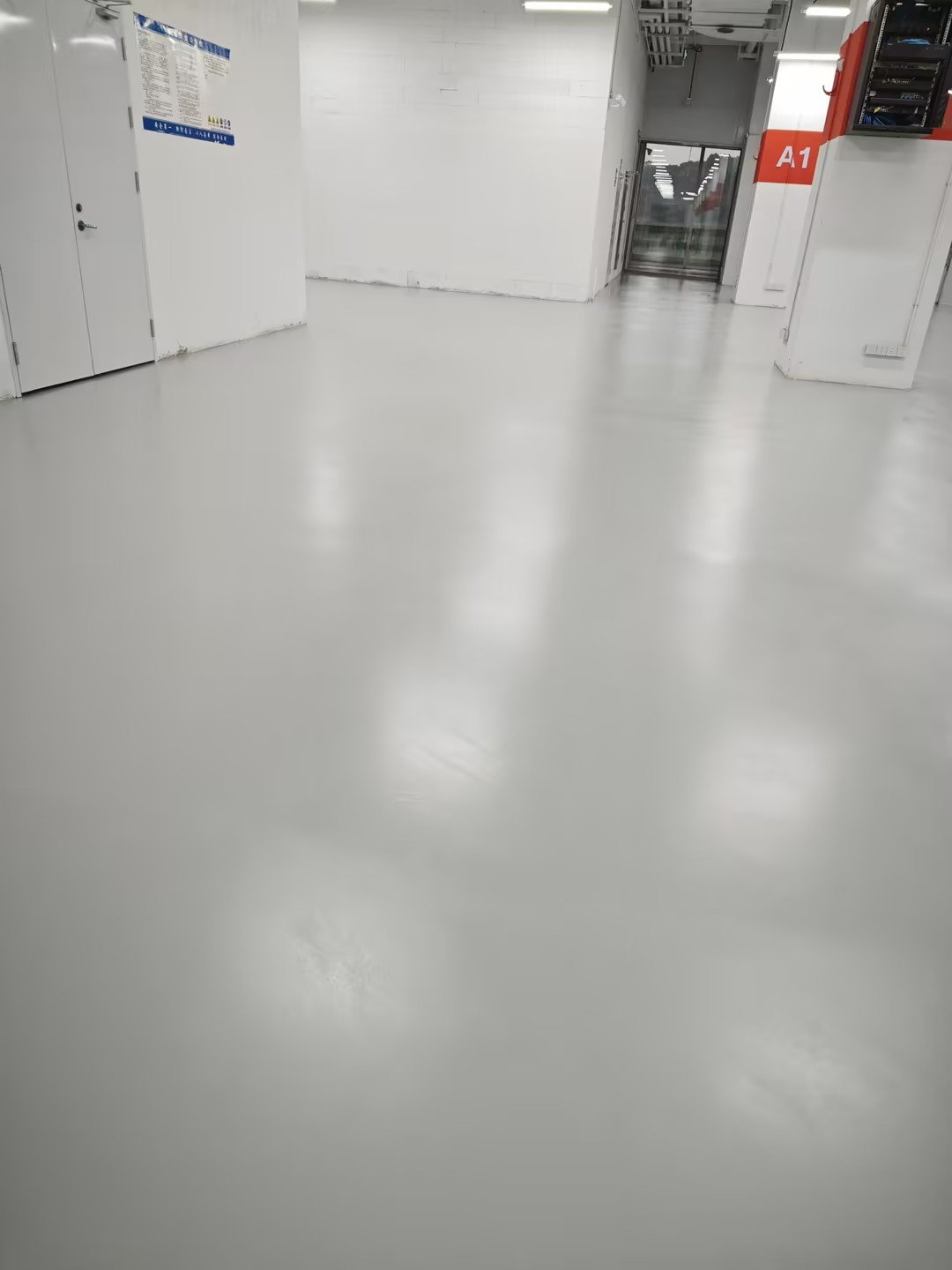
Heavy forklift lanes

Self-levelling with an ultra-abrasion polyurethane topcoat; the sand-textured surface resists the constant scrubbing of forklift traffic.

Assembly workshop floor

Seamless solvent-free epoxy self-levelling; dense, easy to clean and it keeps the workshop tidy.

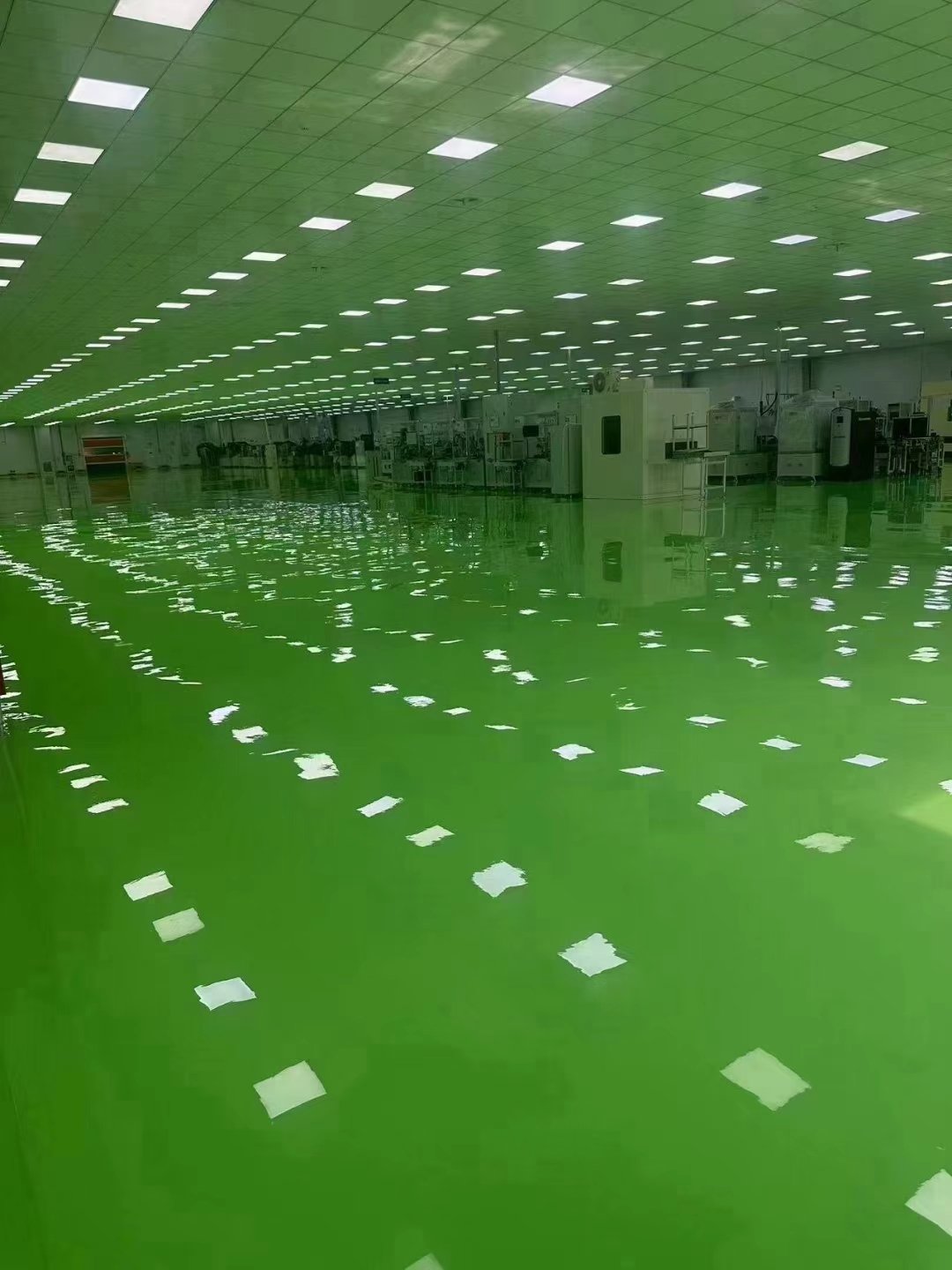
Production area

Self-levelling around production equipment; even gloss, resistant to pressure and impact, easy to keep clean.

Projets représentatifs

Une sélection de projets réalisés par le groupe.

  • Zoomlion Changde construction machinery project

    200,000 m²

    Full-floor epoxy self-levelling across 200,000 m² of heavy-machinery production buildings. Works were phased by production-line installation milestones, with thickened screeds in heavy-traffic lanes; the seamless finished floor is easy to clean and meets the demands of heavy equipment handling.

  • Zoomlion pump-machinery smart manufacturing project, Changsha

    190,000 m²

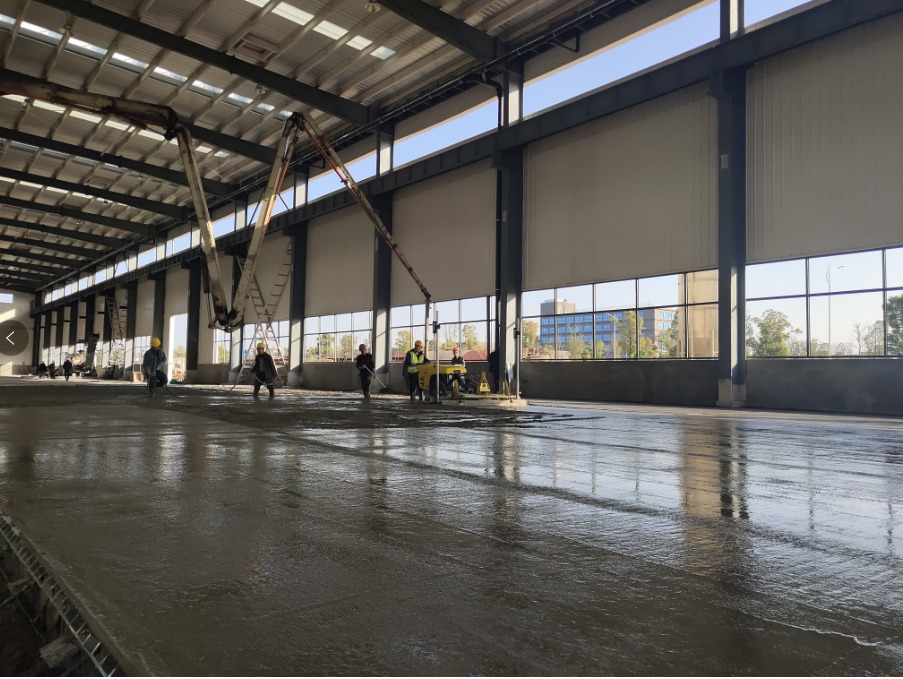
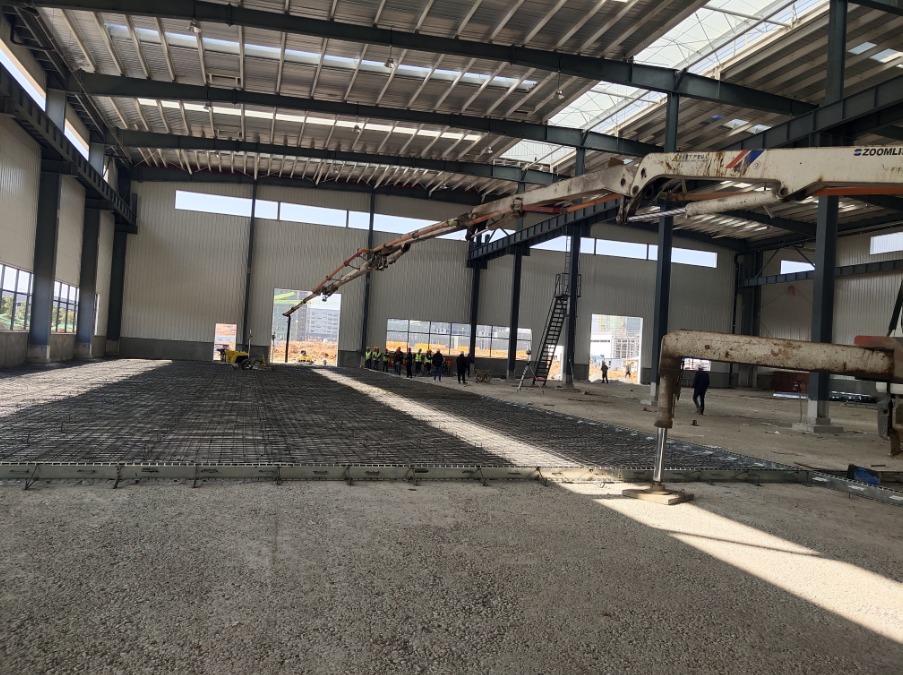
    Large-area flooring across 190,000 m² of smart-manufacturing workshops. Wide spans and overlapping trades called for continuous large-bay pours and mechanised application to hold both flatness and schedule.

  • Zoomlion Yuanjiang mixer-truck plant

    100,000 m²

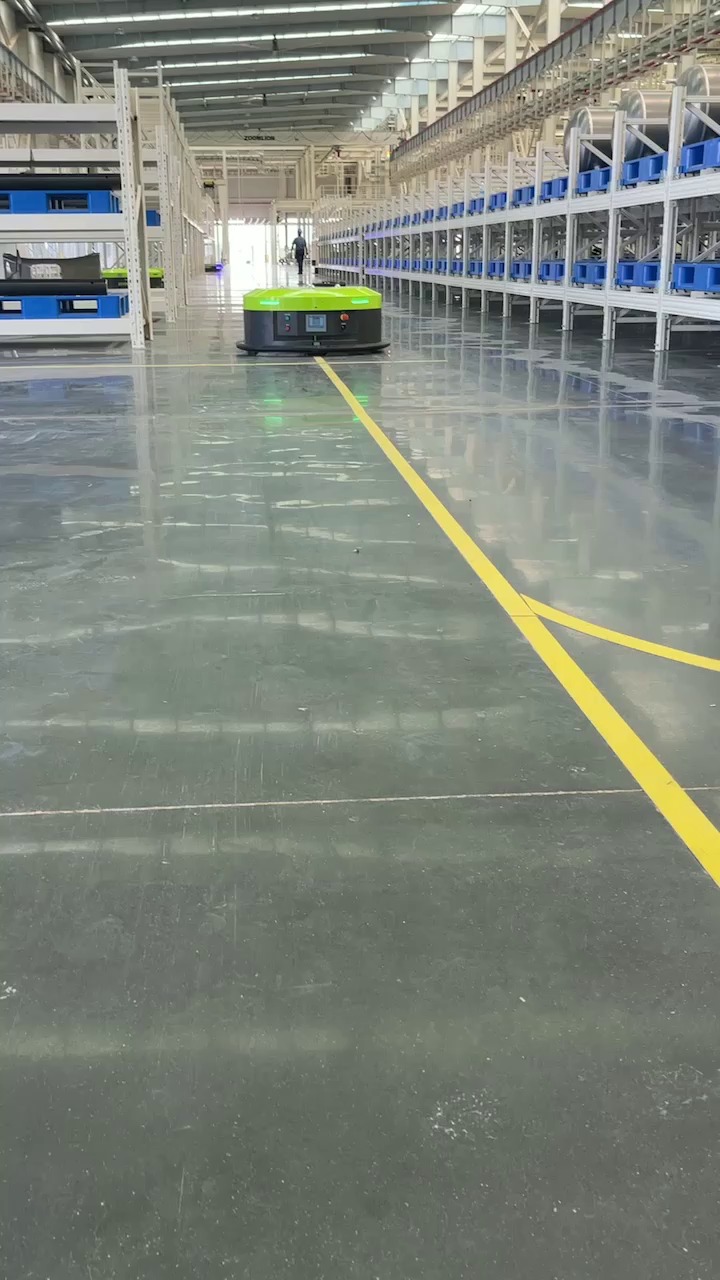
    A floor project with dedicated AGV traffic zones. Because AGVs navigate on floor flatness and markings, flatness was controlled to a dedicated specification; the dark-grey abrasion-resistant surface is line-marked to the logistics paths and has carried stable AGV operation since handover.

  • Automotive paint-shop floors

    Paint shops combine dust control, slip resistance, chemical resistance and cleanability requirements. We deliver combined epoxy and polyurethane systems zone by zone, sequenced around the owner's maintenance calendar — for automotive clients including FAW, SAIC, Dongfeng, Beijing Benz, Shanghai GM, Geely, GAC Honda, BYD, XPeng, NIO, Li Auto and Shacman heavy trucks.

  • Overseas manufacturing projects

    Following Chinese manufacturers abroad, we supplied and applied flooring for the OPPO smart manufacturing centre in Indonesia and overseas plants of MINTH Group and Changyou Group, executed to local schedules and acceptance standards.

  • Long-term production-workshop clients

    Beyond single projects, we have supplied flooring materials and application services for years to plants of FAW Group, Foxconn, China Mobile, State Grid and Shougang Group — sites where continuous production, cleanliness and wear resistance all matter at once.

  • General-contractor partners

    Industrial and commercial floors are usually handed over under a general contractor. We serve as the flooring-package supplier and applicator alongside China Construction Eighth, Third and Fifth Engineering Divisions, Shanghai Construction Group and Jiangsu Construction Engineering Group, taking the floor off the main contractor's critical path.

Questions fréquentes

Ce que les acheteurs demandent le plus lors du choix d'un revêtement de sol.

Should my workshop use epoxy self-levelling or polyurethane mortar?

It depends on the duty. For light-to-medium loads, dry conditions and a clean, presentable finish, epoxy self-levelling is the best value. For heavy forklift traffic, hot washdown, damp or oily environments, waterborne polyurethane mortar is more reliable.

En savoir plus
My slab is newly poured and not fully dry — can you still coat it?

Epoxy systems need a properly dry substrate. If the programme is tight or the slab is damp, a waterborne polyurethane mortar system tolerates more moisture. We check the substrate before starting.

En savoir plus
How long do we have to stop production?

The floor can be applied zone by zone so you hand back areas as they are finished and minimise disruption. The schedule depends on area and system; we set out the zoning and timing before work starts.

En savoir plus
The old floor is dusting and cracked — can a new coating simply go over it?

Not directly. The substrate has to be assessed first: dusting, hollow and cracked areas are ground out and repaired, levelled with repair mortar where needed, then the chosen system is applied.

En savoir plus
How much load can it take?

The load is carried mainly by the concrete slab together with the system build-up. Light-to-medium loads suit epoxy self-levelling; heavy forklift lanes benefit from an ultra-abrasion topcoat or a polyurethane mortar system. We select by load and traffic frequency.

En savoir plus
Is it low-odour and low-emission?

Solvent-free and waterborne systems use water or low-volatile media as the carrier, so odour and VOC are low. The measured values are listed on each product page.

En savoir plus
How do we maintain the floor afterwards?

Keep people and heavy loads off during the curing period, then use normally. Routine cleaning with water or a neutral detergent is enough; avoid steel-wheel rolling and sharp scraping, and inspect periodically so small repairs stay small.

En savoir plus

Parlez-nous de votre sol

Envoyez le support, la surface et les contraintes que le sol doit subir. Vous recevrez un système recommandé, un schéma de complexe et un devis — généralement sous un jour ouvré.

Demander un devis